Hidden Gardens of Nara: Location, Season and the Art of Place in Photography
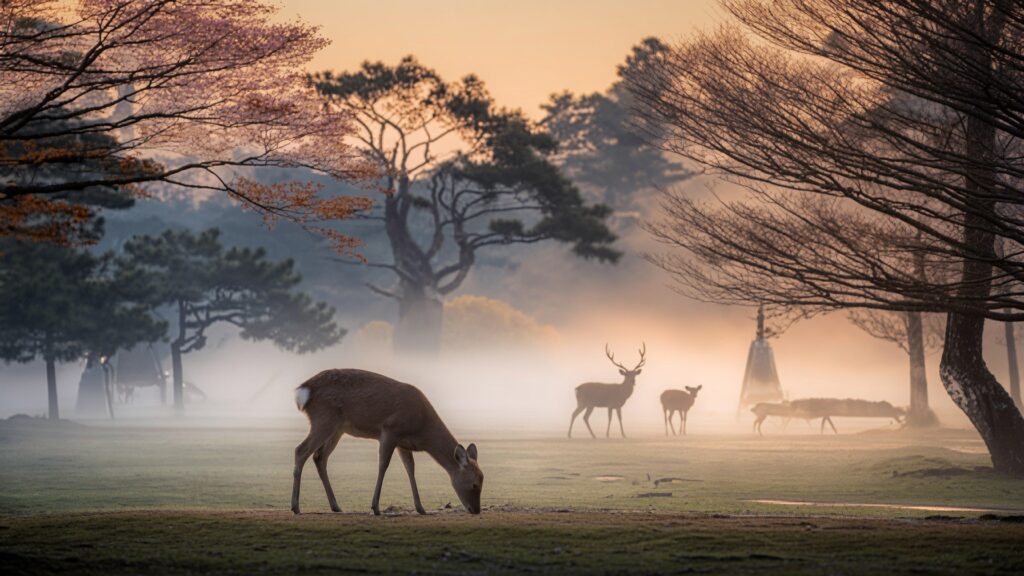
A photographer’s guide to one of Japan’s most layered landscapes – where temples, moss, deer and centuries of stillness shape the image before you press the shutter.
There are cities that serve as backdrops. And there are places that refuse to stay behind the subject – that press forward into the frame, insisting on co-authorship. Nara is one of those places.
Japan’s first permanent capital (710-784 CE) sits in a basin ringed by low mountains in the Kansai region, roughly forty-five minutes by rail from Kyoto and an hour from Osaka. Tourists know it for the deer. Photographers who stay longer discover something else: a concentration of gardens, temple precincts, moss-carpeted groves and primeval forest that rewards patience, seasonal timing and a willingness to let the location lead.
This is not a guide to capturing postcard shots. It is a consideration of how a specific place – its rhythms, its light, its layered history – becomes an active collaborator in the making of photographs, and what that demands of the person behind the lens.
The Landscape as Subject: Why Nara Rewards the Slow Photographer
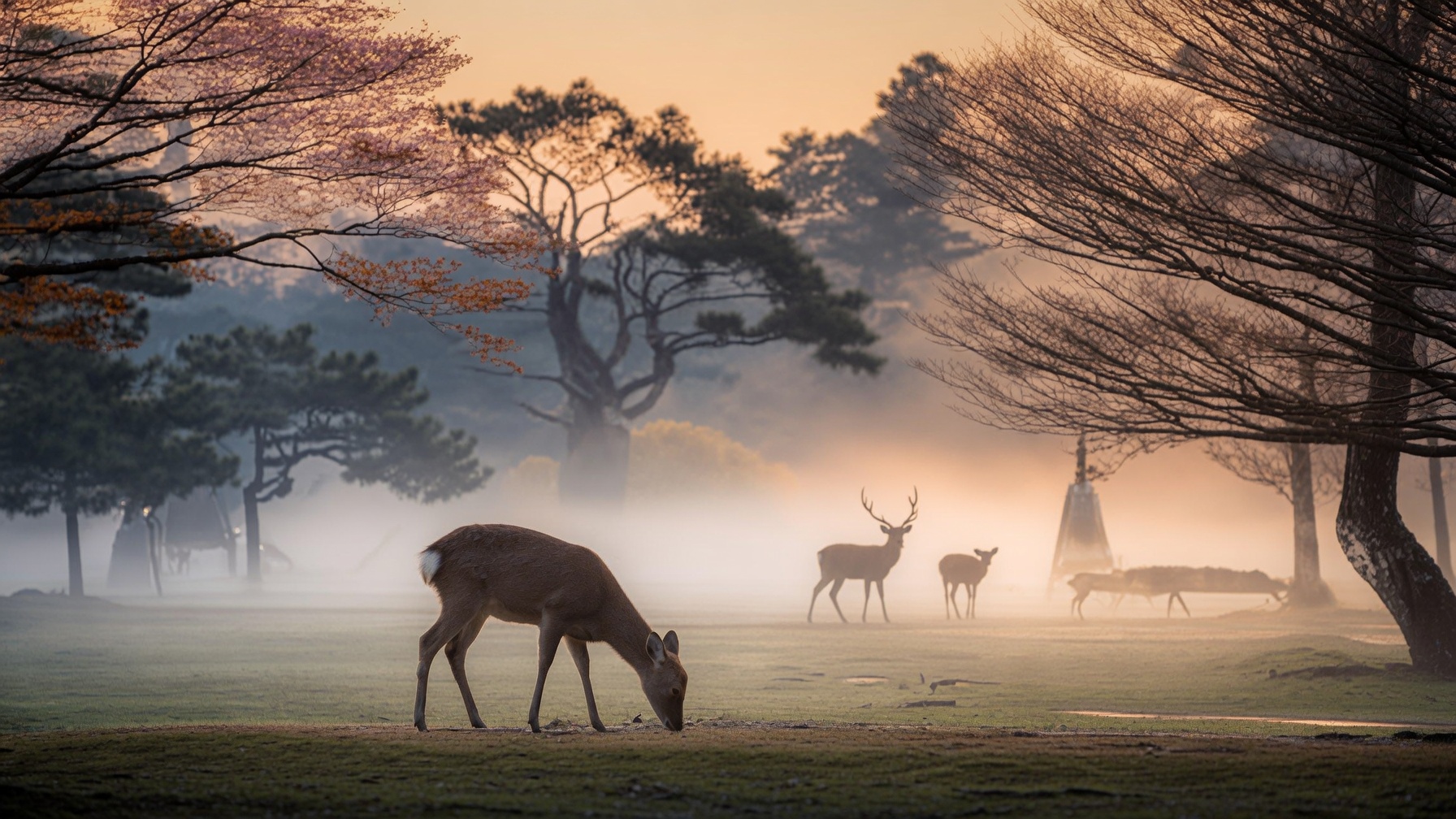
Most visitors to Nara spend three or four hours. They feed the deer at Nara Park, photograph the Great Buddha Hall at Todai-ji, walk part of the approach to Kasuga Taisha, and board the train back to Osaka. That itinerary covers roughly a tenth of what the area holds.
The city’s photographic depth comes from its unusual layering. Within walking distance, you move through open parkland with roughly 1,300 free-roaming sika deer, into formal stroll gardens that frame distant temple rooflines through borrowed scenery (shakkei), and then further east into the Kasugayama Primeval Forest – 298 hectares of ancient woodland where no tree has been felled since 841 CE. The forest was designated a Special Natural Monument in 1955 and inscribed as part of the UNESCO World Heritage Site “Historic Monuments of Ancient Nara” in 1998. Each zone has its own light, its own pace, its own photographic grammar.
The photographer Irie Taikichi (1905-1992), born in Nara and widely considered its defining visual chronicler, spent decades working this territory. His archive of approximately 80,000 images – now housed in the Irie Taikichi Memorial Museum of Photography, a building designed by architect Kisho Kurokawa – charts the same locations across seasons and years. What the archive demonstrates is that Nara does not yield its strongest images to the passing visitor. It rewards the return.
Two Gardens, Two Lessons in Composition
Isuien Garden
Isuien, whose name translates roughly as “garden founded on water,” is the only stroll garden (kaiyushiki) in Nara that is open to the public. It sits along the Yoshikigawa River and is divided into two parts: a front garden dating to the seventeenth century, and a rear garden completed in the Meiji era (late nineteenth century).
The rear garden is the one that teaches you something about photography and place. It uses shakkei – borrowed scenery – to incorporate the massive roof of Todai-ji’s Great Buddha Hall and the profile of Mount Wakakusa into its composition. Standing at the right point on the path, you see the garden’s manicured pond, its clipped hedges, the temple roof floating above them, and the mountain beyond. The garden’s designer understood what every photographer working with landscape eventually learns: that the frame extends beyond what you own.
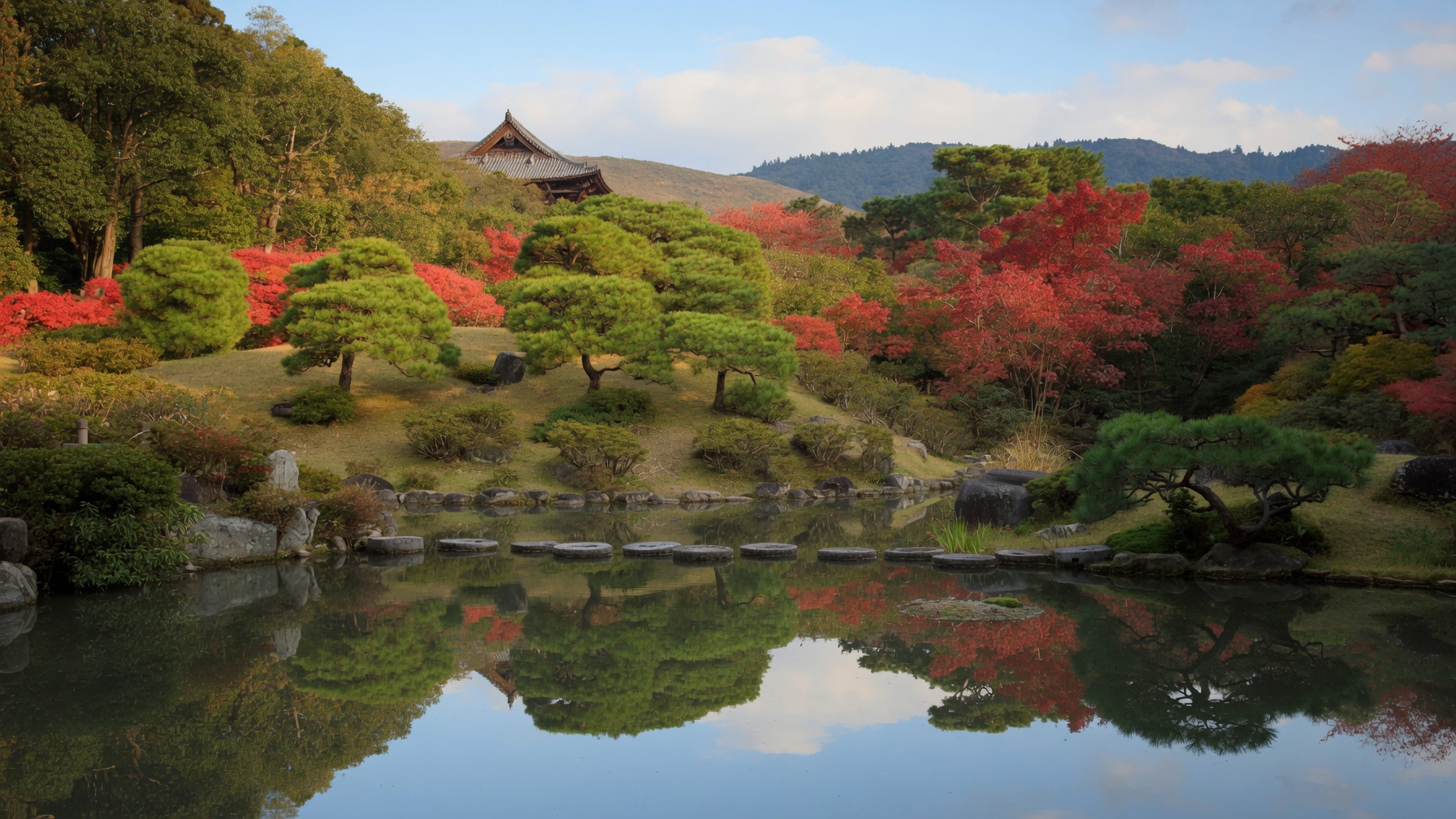
For photography, late afternoon light is particularly effective here, when the sun drops behind the western hills and the borrowed scenery takes on a warm, amber register. The garden’s east-facing orientation means that morning light is direct and somewhat flat; the drama arrives later.
Yoshikien Garden
Adjacent to Isuien but far less visited, Yoshikien Garden occupies the site of former priest residences belonging to Kofuku-ji temple. It is divided into three distinct sections: a pond garden, a moss garden and a tea ceremony garden. Photography is permitted throughout.
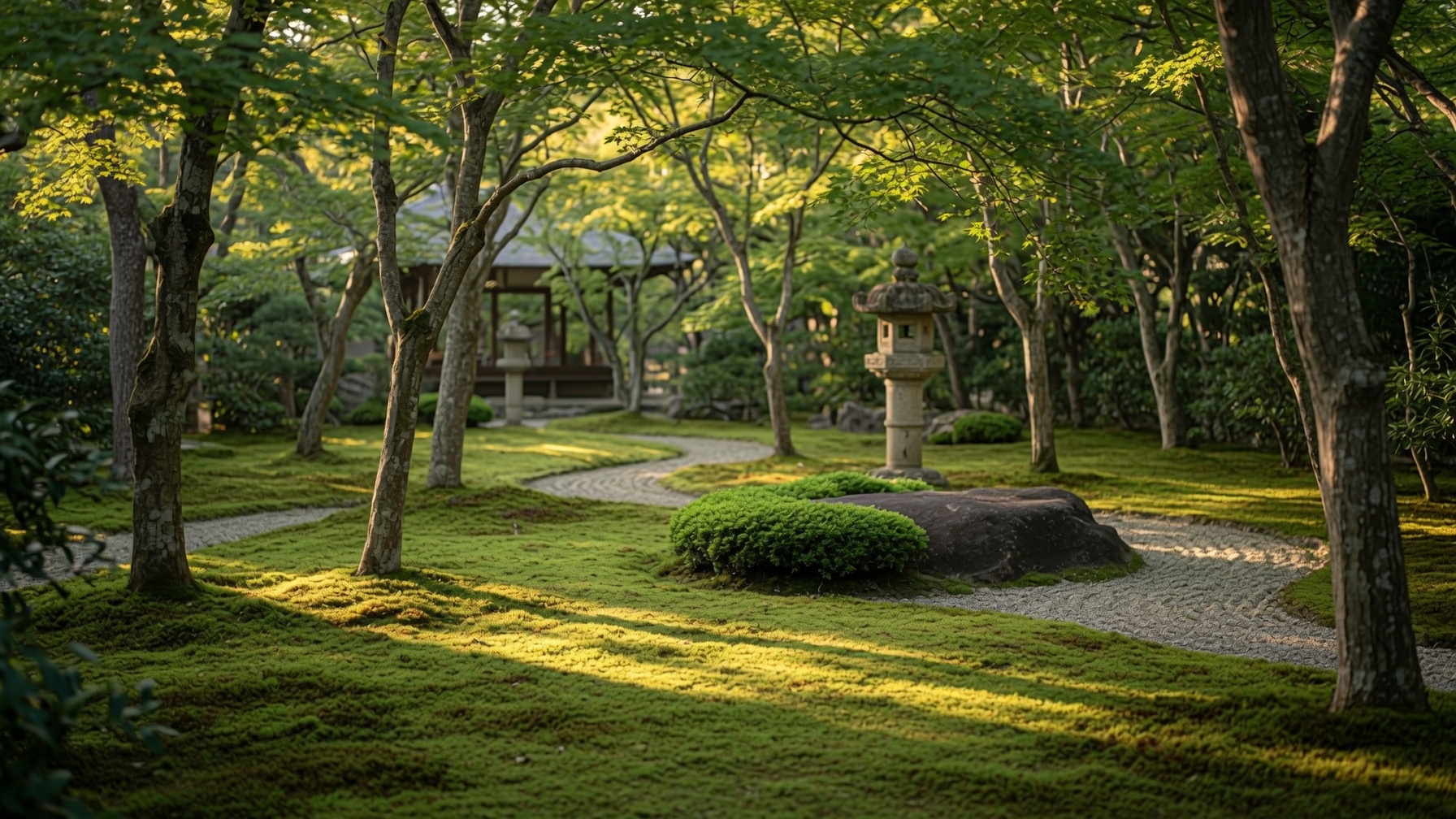
The moss garden section is the draw for photographers. It is compact – you can walk through it in ten minutes – but the density of moss varieties carpeting the ground between the trees creates a surface that changes character with humidity, light angle and season. After rain, it becomes almost luminous. In dry weather, it recedes into muted olive and grey-green.
These two gardens, separated by a short walk, offer a concise lesson in how Japanese garden design and photographic composition share a common principle: the deliberate control of what the viewer sees, in what order, and from where.
The Seasonal Calendar: When Nara Becomes a Different Place
Nara’s gardens and parks are not static. The city’s photographic character shifts dramatically with the seasons, and planning around those shifts is as important as any technical decision about lens or exposure.
Spring (Late March – May)
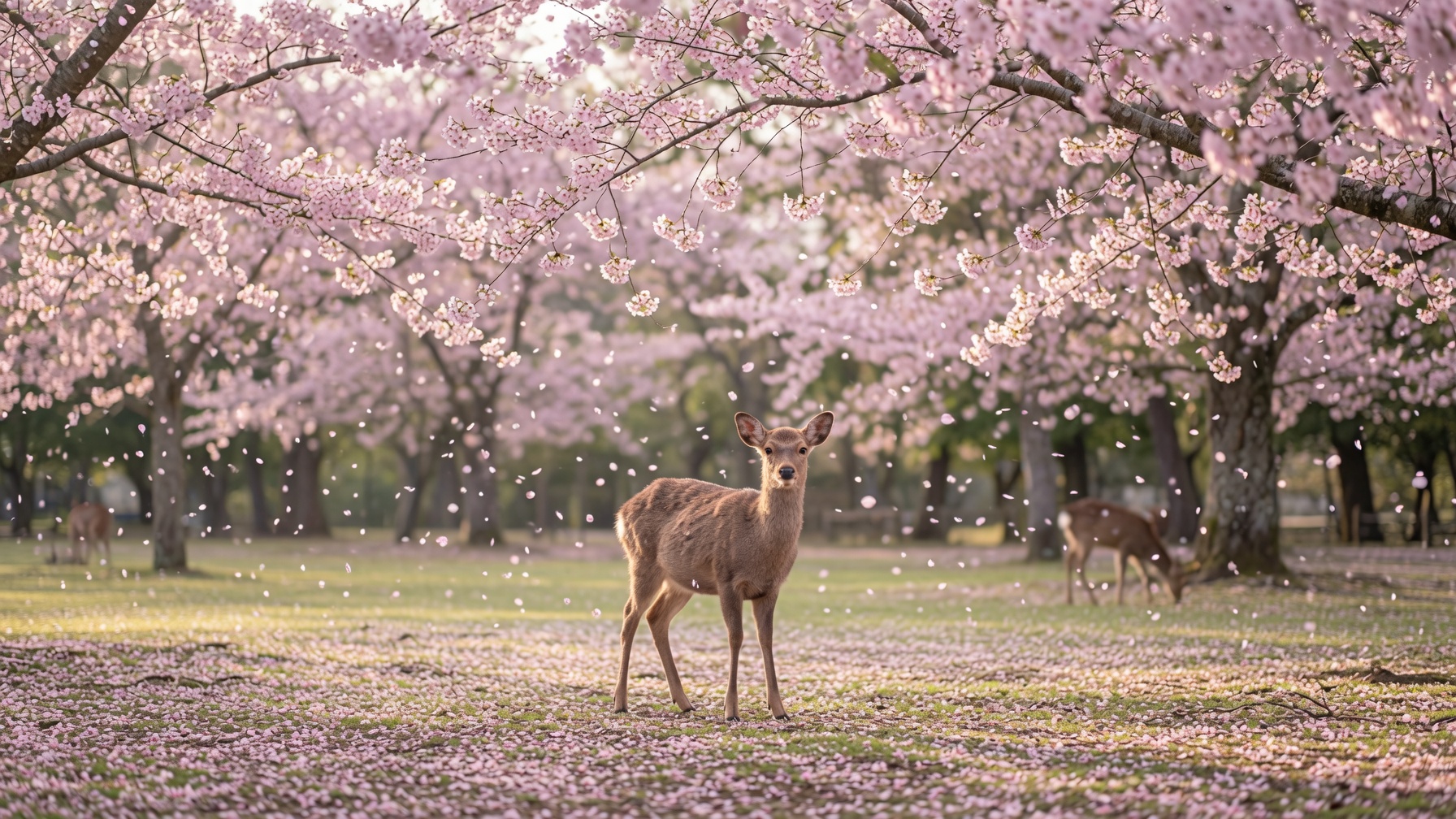
Cherry blossom season (sakura) typically peaks in Nara at the end of March or the beginning of April, with blooms lasting approximately two weeks. Nara Park contains an estimated 1,700 cherry trees across several varieties, including Somei Yoshino, Yamazakura, Shidarezakura (weeping cherry) and Yaezakura (double-petalled). The visual interplay between the blossoms and the deer creates Nara’s most recognisable spring imagery.
For photographers, the critical window is narrow. Full bloom lasts only a few days before petals begin to fall – though the falling petals (hanafubuki) are themselves a subject. Overcast skies diffuse light evenly across blossom canopies and prevent the harsh shadows that direct sun creates on white petals.
At Kasuga Taisha’s Manyou Botanical Garden, the wisteria garden comes into its own in late April and early May, with heavy purple and white racemes cascading from trellises. The iris garden follows in June.
Summer (June – August)
The rainy season (tsuyu) in June and the heat of July and August thin the crowds, which is itself an advantage. The Kasugayama Primeval Forest is coolest in summer, and the moss in Yoshikien reaches its most vivid green during the humid months.
In mid-August, the Mantoro festival at Kasuga Taisha sees all 3,000 of the shrine’s lanterns – roughly 2,000 stone lanterns lining the approach and 1,000 bronze hanging lanterns within the shrine buildings – lit simultaneously. The same event occurs in early February at Setsubun. These are among the most atmospheric photography opportunities in the Kansai region, but they require planning: the shrine is crowded, the light is low, and tripods are generally prohibited on the grounds.
Autumn (October – Early December)
Many photographers consider autumn the strongest season for Nara. The maples, ginkgos and cherry trees in the park and gardens produce a layered palette of red, orange, gold and amber, typically reaching peak colour in mid to late November.
Isuien Garden in autumn is particularly striking, with maple foliage framing the borrowed scenery of Todai-ji. Yoshikien’s pond garden gains a canopy of warm colour reflected in the water. In the wider park, the deer move through carpets of fallen leaves – a subject that has been photographed countless times and yet continues to compel, because the animals’ indifference to the scenery creates an unposed naturalism that is difficult to stage.
Winter (December – February)
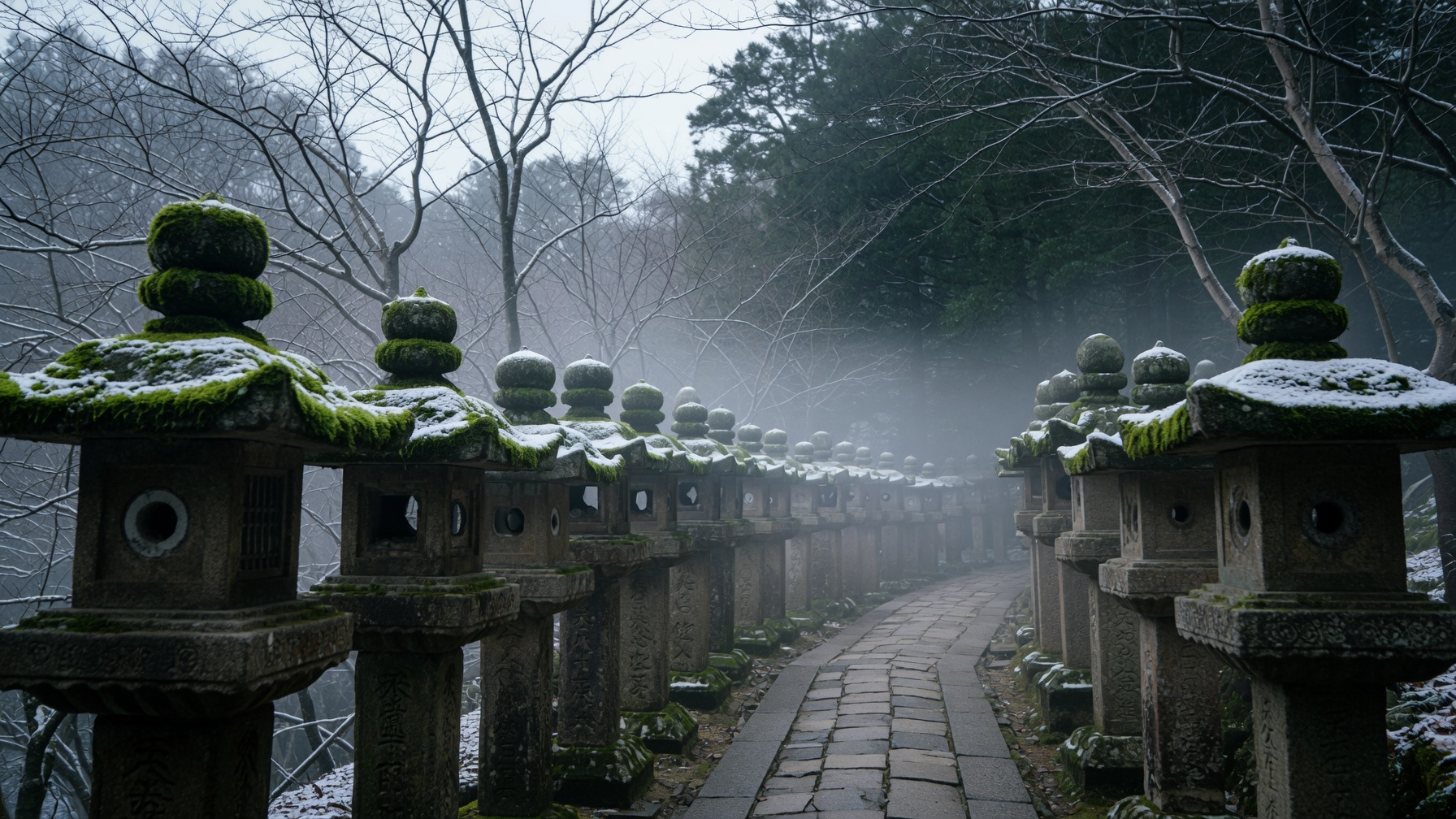
Winter strips Nara back. The deciduous trees are bare, the gardens are quiet, and the deer gather in tighter groups for warmth. Frost on the moss in Yoshikien, mist in the Kasugayama forest, and the stark geometry of temple architecture against grey skies give winter photography in Nara a different register – quieter, more structural, more reliant on form than colour.
The Setsubun Mantoro at Kasuga Taisha (early February) bookends the winter with the same lantern-lighting spectacle as its summer counterpart, but with cold air and the bare-branched approach creating a more austere atmosphere.
Kasuga Taisha and the Primeval Forest: Sacred Ground and Its Demands
Kasuga Taisha, the Shinto shrine founded in 768 CE at the edge of the primeval forest, is both one of Nara’s most photogenic locations and one of its most regulated. The approach – a long, winding path lined with hundreds of moss-covered stone lanterns beneath a canopy of trees – is among the most photographed walks in Japan.
Photography is permitted in most exterior areas, but prohibited inside the Main Sanctuary. Rules vary by area, and posted signage takes priority over any general guidance. Tripods, selfie sticks and monopods are generally not permitted on the shrine grounds. Using a longer focal length to compress the receding rows of lanterns into a dense, rhythmic pattern is a well-known technique here – and one that works handheld if you have steady technique or a fast lens.
Beyond the shrine, the Kasugayama Primeval Forest offers trails through woodland that has been continuously protected for over a thousand years. The forest contains an estimated 175 tree species, including Japanese cedar, evergreen oak and Japanese maple. Photography here is largely unrestricted, though the forest is not maintained as a park – paths can be narrow, and light levels under the canopy are low.
The forest demands something of the photographer that many more accessible locations do not: patience with low light, comfort with ambiguity, and a willingness to make images that do not have an obvious subject. The subject is the place itself – the age and density of the woodland, the quality of the air, the sound of water. Translating those into a two-dimensional frame is the challenge and the reward.
Etiquette, Permits and Respect at Sacred Sites
Photography in Nara’s temple and shrine precincts is governed by a patchwork of rules that vary from site to site. There is no single city-wide photography permit. The general principles are consistent, however, and worth knowing before you arrive.
Interior restrictions. Most temple and shrine interiors prohibit photography entirely. Where photography is permitted inside, flash is almost always forbidden, as it can damage ancient pigments, lacquer and textiles. Todai-ji’s Great Buddha Hall is a notable exception where interior photography is allowed – but without flash or tripods.
Tripods and large equipment. Tripods (sankyaku) are prohibited at most major shrines and many temple precincts, both to prevent damage to pathways and to avoid obstructing other visitors. Signs displaying a tripod icon with a red cross and the characters sankyaku kinshi (three-leg prohibition) are common. Monopods and selfie sticks typically fall under the same restriction.
Respect for worshippers. Shrines and temples are active places of worship, not museums. Photographing people engaged in prayer without their consent is poor practice everywhere; at sacred sites in Japan, it is considered particularly disrespectful. Step to the side, wait for a clear moment, or frame the architecture without including identifiable individuals.
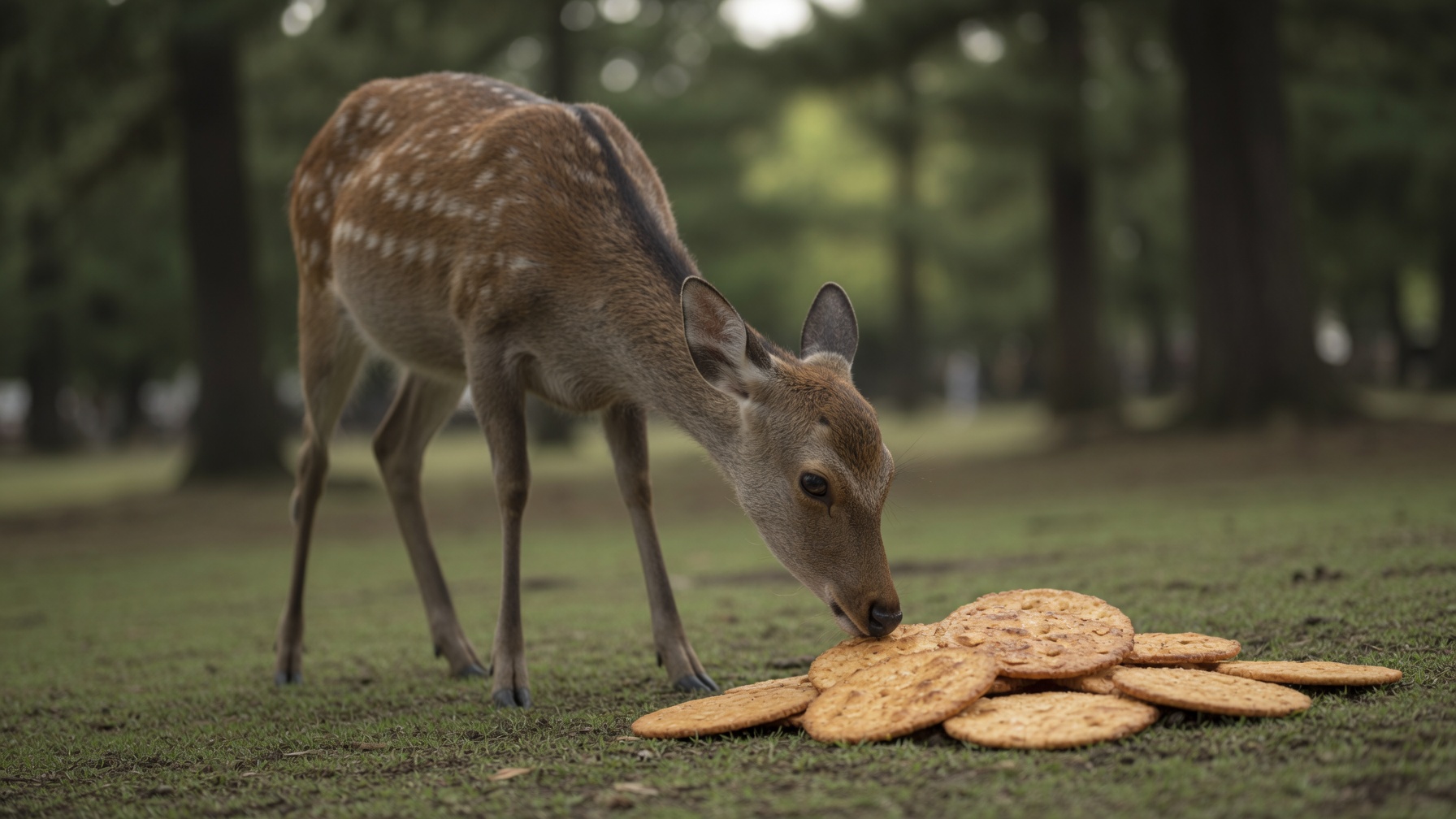
Deer welfare. The sika deer of Nara Park are designated as National Natural Treasures. Feeding them anything other than the official shika senbei (deer crackers sold by licensed vendors) is prohibited. Do not pursue, corner, or handle them for a photograph. The strongest deer images come from distance, patience and a long lens – the deer compose themselves far better than any photographer could arrange them.
Commercial permits. Professional shoots, including those involving models, lighting equipment or crew, generally require advance permission from the relevant temple or shrine administration, or from Nara City for park locations. Requirements vary, so contact the managing body directly.
Planning Around Light: Practical Craft for Place Photography
Nara’s topography – a basin with mountains to the east and south – creates predictable light patterns that you can plan around.
Dawn (5:00-7:00 in summer, 6:30-8:00 in winter). The eastern mountains delay direct sunrise over the park and gardens by roughly thirty minutes compared to flat terrain. This extended blue hour is valuable for atmospheric work in the Kasugayama forest and along the lantern-lined approach to Kasuga Taisha.
Morning (7:00-10:00). Direct eastern light floods the park and the east-facing facades of Kofuku-ji's five-storey pagoda. This is the best window for the pagoda reflected in Sarusawa Pond - a classic Nara composition. The deer are also at their calmest in early morning, before the first tourist buses arrive. Photographers who arrive before 8:00 often have sections of the park effectively to themselves.
Midday (10:00-14:00). High sun produces harsh shadows in open parkland but works well under the forest canopy, where shafts of direct light create contrast against the dark understory. The gardens, designed for strolling rather than overhead light, are generally less photogenic at midday.
Late afternoon (14:00-17:00). West-facing elements - including the rear garden at Isuien - begin to receive warm, raking light. This is the strongest window for the borrowed-scenery compositions, as the low-angle light models the distant temple rooflines and mountain profiles.
Dusk and blue hour. The Kofuku-ji pagoda, illuminated year-round after dark, becomes a powerful subject against the deepening sky during the twenty minutes after sunset. The reflection in Sarusawa Pond doubles the composition.
For anyone seeking a deeper visual companion to these locations - covering seasonal timing, access and the quieter corners of the area - a guide to Nara's hidden gardens and their seasonal rhythms offers detailed coverage worth consulting alongside your own reconnaissance.
The Photographer and the Place: A Final Thought
Nara is not a city that asks to be conquered photographically. It is not Tokyo, where speed and density reward the reactive shooter, or Kyoto, where the density of famous compositions can make originality a conscious struggle. Nara asks for something simpler and more difficult: the willingness to sit with a location long enough that it stops being a backdrop and starts becoming a collaborator.
The moss in Yoshikien does not perform for you. The deer do not pose. The lanterns at Kasuga Taisha were not placed for your composition. The primeval forest does not care about your schedule. And yet, if you adjust your pace to theirs - if you return in a different season, arrive in different light, accept the frame the place offers rather than the one you planned - Nara gives back images that feel as though the place made them with you.
That, in the end, is what location photography at its best can be: not the imposition of a vision on a landscape, but a negotiation between what you see and what the place has been becoming for a thousand years.
Nara's temples and gardens are served by JR Nara Station and Kintetsu Nara Station. Most locations mentioned in this article are within walking distance of Kintetsu Nara. Isuien and Yoshikien gardens charge modest admission fees (Yoshikien is free for foreign visitors on presentation of a passport). Kasuga Taisha's inner shrine area has a separate entry fee. The Irie Taikichi Memorial Museum of Photography is a short bus ride from the city centre.
Note on sources
Place names, dates and designations (UNESCO inscription, Special Natural Monument status, Mantoro festival timing) are drawn from official sources including the Nara City tourism authority (narashikanko.or.jp), the Japan National Tourism Organization (japan.travel), and the Kasugayama Primeval Forest entry on Wikipedia. Deer population and cherry tree counts are widely cited estimates that vary between sources; figures given here reflect commonly reported numbers as of 2025-2026. Irie Taikichi biographical details are drawn from his Wikipedia entry and the memorial museum's own materials (naracmp.jp). Photography regulations are general guidance based on posted rules and published visitor information - always verify current rules on-site, as policies can change.